
Where Cargo Goes to Change Its Past
A White House report prices the laundering of Chinese goods’ origin at 40 to 303 billion dollars a year, moved through more than 40 countries. The numbers are softer than they look, the problem is harder, and the fix will not come from customs.
Robert Nogacki
The Flawless File
In Long Beach a customs officer opens a container of electric motors declared Malaysian. The invoice matches the packing list, the packing list matches the certificate of origin, and the certificate matches nothing that ever happened. Somewhere behind those motors sits a factory in Guangdong; somewhere between Guangdong and California sits a warehouse where the cargo paused just long enough to acquire a new biography. Every document in the file is flawless. In this business, flawless is the tell.
On August 13 the White House Office of Trade and Manufacturing Policy released a report that gives this craft a name, a map and a price. The cover art is a Trojan horse built of shipping containers, which is the rare case of a government graphic that understates the problem. The Great Transshipment Scam, as the report calls it, describes a network of more than 40 countries through which Chinese goods are rerouted, relabeled, reinvoiced and lightly reprocessed on their way to the American market. The report’s estimates of the annual flow run from 40 to 303 billion dollars; its estimates of lost tariff revenue run from 10 to 136 billion depending on assumptions, with the central cases at 19 to 34 billion; and its model puts the displaced jobs, in the central case, at 450,000.
The report is right about the phenomenon. It is considerably less right about the unit of measure. And its instinct, which is to build a smarter border, aims at the container when the crime lives elsewhere: in documents, in corporate structure, and in money. Understanding why requires a detour through the eighteenth century and a washing machine.
An Old Crime at New Scale
Smuggling has always been the shadow price of tariffs. In eighteenth century Britain, tea carried a duty of 119 percent, and the predictable result was that most tea drunk in Britain never met a customs officer. Period estimates put the contraband at around seven million pounds a year against roughly five million taxed; entire coastal economies organized themselves around the trade. In 1784 William Pitt the Younger, advised by the tea merchant Richard Twining, tried something radical. The Commutation Act cut the duty from 119 percent to 12.5 percent. Smuggling did not decline; it collapsed, and taxed imports more than tripled within a year. Pitt had grasped the essential point: smuggling is not a moral phenomenon but a price phenomenon. The spread is the smuggler’s business plan.
The modern predicament is that Pitt’s cure is unavailable by design. The differentiated tariffs of 2025 and 2026 are not an accident to be corrected but an instrument of leverage, calibrated country by country. Washington wants the spread. It merely does not want anyone to arbitrage it. That is a coherent position, but it carries a consequence the report only half absorbs: if the spread must exist, enforcement has to carry the entire weight that price once carried, indefinitely, against an adversary who adapts faster than the Federal Register.
How much faster is a matter of record. In 2012 the United States imposed antidumping duties on washing machines from South Korea and Mexico after complaints from Whirlpool. Samsung and LG moved production to China. Whirlpool petitioned again; in 2016 and 2017 the government moved against Chinese washers, and months before the order landed, the two companies stockpiled inventory in American warehouses and shifted production once more, this time to Vietnam and Thailand. Whirlpool, by now calling its rivals serial violators, gave up on chasing countries and sought a global safeguard. In January 2018 it got one: a tariff rate quota on washers from anywhere, 20 percent within the first 1.2 million units and 50 percent beyond. Samsung and LG finally opened plants in South Carolina and Tennessee. Economists at the Federal Reserve and the University of Chicago later tallied the bill: washer prices up roughly 12 percent, a consumer cost of about 1.5 billion dollars a year, and a price per manufacturing job created in the neighborhood of 815,000 dollars.
Two lessons travel from that saga to the present one. Capital reorganizes production faster than trade law can follow it; the game is iterative, and the government moves second. And, crucially, almost everything Samsung and LG did was legal. Moving a factory is not fraud. That distinction, between adaptation and deception, is the fault line running under the entire transshipment debate, and the new report steps over it a little too briskly.
The Map
Give the report its due: as cartography, it is the most detailed public account of the rerouting economy yet produced. Its story begins in 2018, when Section 301 tariffs covering roughly 370 billion dollars of Chinese goods, about seventy percent of what China then sold to America, made direct shipment expensive. Chinese exporters responded with what the report calls the Great Reallocation: goods that once sailed from Shenzhen to Los Angeles began pausing in third countries, where minor processing, relabeling or fresh paperwork could conjure a new national origin.
The report sorts the enabling jurisdictions into three tiers. At the top sit diversified giants, the European Union, Canada, Mexico, Japan, South Korea, India, Israel and Taiwan, where illicit flows hide inside vast legitimate ones. A middle tier of Southeast Asian manufacturing platforms plus Brazil and Turkey combines real industrial capacity with deep integration into Chinese supply chains. The third tier is a long tail of small jurisdictions selling specific advantages: bonded warehouses, permissive free zones, strategic ports, thin customs capacity. The report then maps functions rather than flags: microhubs for light assembly in Cambodia and Bangladesh; a processing belt in Poland, Czechia, Hungary and Romania; maritime gateways such as Jebel Ali in the Emirates and Port Klang in Malaysia; overland Belt and Road nodes through the Caucasus and Central Asia.
None of this is hypothetical. In 2023, after a petition from a small American producer, the Commerce Department formally found that solar cells assembled in Cambodia, Malaysia, Thailand and Vietnam from Chinese wafers were circumventing the China orders, and directed that they be treated as Chinese. In December 2025 a distributor called Ceratizit USA paid 54.4 million dollars, the largest customs settlement in the history of the False Claims Act, over Chinese tungsten carbide dressed up as Taiwanese. The mechanism menu is familiar to any financial crime practitioner: false origin, undervaluation, misclassification, related party invoicing, and the elegant abuse of first sale valuation. Stack the duties involved and the incentive becomes vivid; some Chinese product lines carry combined antidumping and countervailing exposure above 200 percent, with quartz surfaces reaching dumping margins of 336.69 percent. Against numbers like that, a warehouse in a free zone is not logistics. It is a printing press.
To all this the administration has attached remedies: clauses against transshipment written into the new Agreements on Reciprocal Trade; an executive order signed June 3, 2026 that tightens importer of record eligibility, bonding, ownership disclosure and penalties; and an aspiration the report calls the AI Detective Border, a fusion of shipment data, routing histories, capacity indicators and computer vision.
What the Numbers Know
Then there are the estimates, and they deserve the kind of reading an intelligence analyst gives a defector: valuable, and interested. Five sources anchor the headline range. Goldman Sachs, working from 2023 trade flows, isolates pure rerouting at roughly 40 billion dollars, about a fifth of the decline in China’s direct exports to America. The Council of Economic Advisers screens Section 301 goods and lands between 34.2 and 89.6 billion. Exiger, an AI supply chain firm, screens shipments and offers 75 billion. The Commerce Department benchmarks 109 billion in trade transfer and, separately, 67 billion moving through Mexico, India and Vietnam alone. Altana, another supply chain analytics firm, maps facility level exposure and produces 303 billion.
When five serious estimates of one phenomenon disagree by a factor of seven, the finding is not the number. The finding is the size of the blind spot. And the sourcing deserves a note of its own. Two of the five estimates come from the administration measuring its own policy. Two more come from firms that sell detection software; one of them holds an exclusive contract with Customs and Border Protection to find exactly what it is estimating, and the other concedes in its own materials that only part of what it measures is likely illegal. The one estimator with no stake in the answer produced the lowest number. That does not make the higher figures wrong. It makes them testimony rather than measurement.
The academic literature, which the report cites and then outruns, is more austere. The transaction level method it borrows comes from a Harvard Business School working paper whose authors, examining Vietnam, found rerouting on the order of eight billion dollars in the first three quarters of 2025, and concluded that rerouting is less prevalent than aggregate statistics suggest. Economists Laura Alfaro and Davin Chor, surveying the reallocation, judged that pure rerouting is unlikely to account for the bulk of Vietnam’s and Mexico’s export growth to the United States. There is also a quiet arithmetic problem in the report’s most dramatic chart, which shows the share of American imports held by the more than 40 suspect countries rising as China’s falls. Since that group includes the European Union, Canada, Mexico, Japan, South Korea, India and Taiwan, which is to say most of America’s suppliers, the two lines could hardly do anything else. The chart proves substitution. Substitution is what tariffs are for.
The dollar conversions lean the same way. The report prices lost revenue at differentials of 25, 35 and 45 percent, anchored to an average statutory China tariff near 50 percent. But statutory is not collected: measured at the border, the effective rate on Chinese goods has run closer to 30 to 34 percent, and in February 2026 the Supreme Court struck down the tariffs built on emergency economic powers, forcing the administration to rebuild the structure on narrower statutory ground. The report’s own cross check, Commerce’s transaction study, implies real losses; the top scenarios price fraud at rates few importers actually pay. The gravest overreach is the jobs model. The report multiplies transshipment flows by a rule of 6,000 jobs per billion dollars of trade deficit, a convention drawn from Economic Policy Institute studies that mainstream economists have long disputed, and applies it to the wrong counterfactual. Goods laundered through Penang were previously imported from China and would otherwise arrive from China with duty paid, or from some other low wage platform. They were never going to be made in Ohio. The first order national loss from transshipment is revenue, not employment, and inflating it into half a million jobs hands critics a gift.
One last detail, small but symptomatic: in illustrating stacked duties, the report cites antidumping rates for Chinese aluminum wire that correspond to the preliminary determination rather than the final orders. In an indictment, the exhibits should be exact.
Why Customs Cannot See It
Strip away the estimate wars and a sharper problem emerges, one the report gestures at without naming. Customs is an institution built to inspect objects. This crime is not committed in objects. It is committed in paperwork, in corporate structure and in payment flows, which is why the officer in Long Beach finds nothing: there is nothing physical to find. The motors are real motors. Only their past is forged.
An intelligence officer would recognize the architecture instantly. Production nodes where a Chinese motor acquires local screws. Cutouts where documents change faster than cargo. Free zones functioning as safe houses where goods wait between identities. Reinvoicing as legend building; shell importers as expendable couriers. And the corridors are agnostic about their cargo: rails built to launder tariff exposure can launder sanctions exposure with no retooling at all, which is why this map should interest security services as much as trade lawyers. The report’s answer, the AI Detective Border, is genuinely necessary; anomaly detection at national scale is exactly what machine learning is for. But detection is the cheap half of enforcement. A signal only matters if some institution has the incentive, the authority and the information to act on it. That is a design problem, and it suggests five designs.
Five Ways to Raise the Price of Fraud
Follow the spread, not the ship. The tariff differential is a profit pool, hundreds of millions of dollars per billion of goods, and that pool moves through the banking system: letters of credit, receivables financing, related party settlements. Treating origin fraud explicitly as a predicate for money laundering would conscript trade finance into the fight, obliging the banks that fund flagged corridors to screen origin risk the way they already screen sanctions risk, with targeted orders for specific corridor finance where warranted. The sanctions precedent is encouraging: within a decade, compliance reshaped the behavior of global banking more thoroughly than any fleet of inspectors. Fraud that cannot bank cannot scale.
Pay the humans. The cheapest sensor in any free zone is a clerk who knows which invoice was printed twice. The machinery already exists: a whistleblower suit under the False Claims Act brought the Ceratizit case, and the relator collected 9.75 million dollars; fiscal 2025 set records both for recoveries, at 6.8 billion dollars, and for whistleblower filings, at 1,297; a joint task force of the Justice and Homeland Security departments has solicited trade fraud tips since August 2025, and the criminal division has listed tariff evasion among its priorities. The design flaw sits at the border itself, where the old customs informant statute caps awards at the lesser of a quarter of the recovery or 250,000 dollars, pocket change against schemes that run to nine figures. Uncap it, publish the awards, and advertise them in the working languages of the free zones. Human sources beat satellites where the crime is stationery.
Demand a capacity alibi. Physics does not file false paperwork. Genuine transformation leaves a signature: energy drawn, payroll paid, machines depreciating. Origin claims on risky product lines should therefore carry a verifiable capacity story, with export volumes tested against electricity consumption, employment and equipment, satellite imagery where useful. A factory exporting more than its power bill supports has produced literature, not a certificate. The incentive should cut both ways: preregistered, audited capacity earns a green lane at the border, the trusted trader logic extended from security to origin, while unverified claims wait, and waiting is expensive. Done properly, this converts compliance from a tax into a competitive advantage.
Build the golden bridge for transit states. The report treats enabling countries as suspects; they are also shareholders. Free zones generate fees, jobs, rents and port revenue, so pressure alone purchases theatrical compliance, a solemn task force and a few sacrificial seizures. The incentive has to be rebuilt: share recovered duties with governments whose zones certify and genuinely police origin, and where they decline, let flagged product lines inherit the China rate automatically. The Vietnam agreement of 2025, with its separate 40 percent tier for transshipped goods, is the prototype of origin risk priced directly into the tariff schedule. Every transit state then faces a clean choice: become a certified corridor, or become a risk priced into the schedule.
Treat importer accountability as corporate counterintelligence. The June executive order moved the burden onto the importer of record: bonding, ownership disclosure, good standing. Ignorance has been repriced from a defense into an allegation. What is still missing is a defined provenance standard, routing histories, dwell times, component origin, maps of beneficial ownership, so that due diligence has testable content rather than ritual form. Companies will end up running small intelligence cells whether the regulations name them or not, because the relator bar and the border algorithms are already running the same analysis from the outside. The dossier should be built like an intelligence assessment, for the simple reason that a prosecutor will eventually read it as one.
The Shadow Files Paperwork
Pitt had the easy option, and took it: he collapsed the spread, and the smuggling fleets of the Channel coast lost their business model overnight. That option is now foreclosed on purpose; the spread is the policy. What remains is the hard option: making deception more expensive than adaptation, everywhere, indefinitely, against a network that reorganizes in months and books fines as a cost of goods sold. The new report, whatever the softness of its arithmetic, has at least put the map on the table.
Smuggling was always the shadow price of tariffs. The novelty of our moment is that the shadow now files paperwork, in triplicate, flawlessly. The question is whether anyone is paid, equipped and incentivized to read it before the container clears.
Sources are linked in the text. The report discussed is The Great Transshipment Scam: Rise, Scope, and Costs, White House Office of Trade and Manufacturing Policy, August 2026.
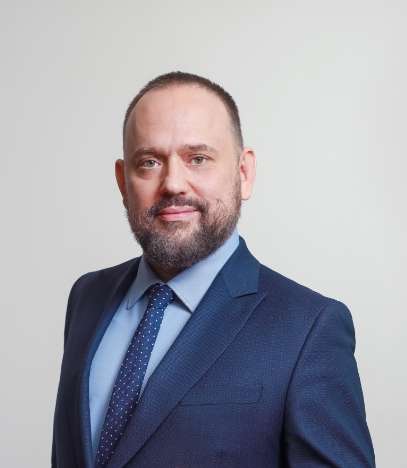
Robert Nogacki is a Polish attorney at law (radca prawny), the founder and managing partner of Kancelaria Prawna Skarbiec (Skarbiec Law Firm), which has operated continuously since 2006.
The law is equal for everyone, but the parties rarely are: on one side stands an organization with time, money, and lawyers, on the other a person with one business, one nest egg, and one life.
Clients rarely come to him with a legal problem. They come with a problem that also has a legal side: an audit that began with a single invoice, money entrusted to someone who has disappeared, a company that has to be passed on before it is too late. Most such matters are decided long before the first letter is written, in decisions made without asking and in deadlines nobody remembered. So he begins by asking how the client got here, not what the client should have done.
He advises entrepreneurs and families from more than a dozen countries, including those whose accounts the tax office has just seized and who do not know what to do tomorrow morning. He defends them in tax audits, customs and fiscal inspections, disputes with the tax authorities, and criminal tax proceedings. He represents victims of investment fraud and Ponzi schemes. He helps families set up family foundations and plan succession, so that a life’s work outlasts a single generation.
Not every case can be won. Every case can be run so that the client knows where they stand. Since 2006 he has represented the victims in the WGI case (Warszawska Grupa Inwestycyjna, the Warsaw Investment Group), one of the longest criminal cases in the history of the Polish financial market, because some things must not be left half finished, even when they take two decades. In the case of the collapsed cryptocurrency exchange Zonda (Zondacrypto, operated by BB Trade Estonia OÜ), he represents several hundred victims in the criminal investigation conducted by Poland’s National Prosecutor’s Office and in the Estonian bankruptcy proceedings.
Kancelaria Prawna Skarbiec is listed in the rankings of Poland’s largest tax advisory firms published by Dziennik Gazeta Prawna and Rzeczpospolita, and it is a four-time recipient (2015 to 2018) of the European Medal awarded by the Business Centre Club and the European Economic and Social Committee. Robert Nogacki publishes regularly, in the press and on the firm’s website, for people who have a problem rather than a law degree, because a legal opinion the client cannot understand protects only the lawyer.
He believes that the best legal advice is the kind that means the client never has to appear in court.