LONDONGRAD: How London Became the Oligarchs’ Favorite Address—and Why Evicting Them Has Proved So Complicated
In November of last year, somewhere in the gray waters off the Irish coast, a Royal Navy submarine did something unusual: it surfaced. This was not an emergency. The vessel rose deliberately, positioning itself within clear view of the Yantar, a Russian ship that Western intelligence agencies have long suspected of mapping undersea cables—the fragile filaments of fiber optic that carry nearly all of the world’s internet traffic and, not incidentally, a great deal of classified communications between NATO allies. The submarine lingered there, visible, a cetacean rebuke. Then it descended again and vanished.
The episode, disclosed by Defence Secretary John Healey in January, was meant to send a message to Moscow: We see you. But it also served as an inadvertent metaphor for Britain’s broader predicament with Russia—decades of permissiveness suddenly giving way to belated, somewhat theatrical assertions of vigilance. The submarine surfaced, made its point, and sank back into the depths. The Yantar continued on its way.
For most of the past quarter century, the United Kingdom operated what might charitably be called an open-door policy toward Russian wealth. Less charitably—and more accurately—it functioned as the Western world’s most obliging laundromat. The Intelligence and Security Committee of Parliament, in a report published in 2020, described the situation with unusual candor: “Successive Governments have welcomed the oligarchs and their money with open arms, providing them with a means of recycling illicit finance through the London ‘laundromat,’ and connections at the highest levels with access to UK companies and political figures.” The committee called Russian influence in Britain “the new normal.”
Normal is a curious word for what took place. Between 2008 and 2022, the British government issued more than thirteen thousand “golden visas”—a residency program that offered, for a minimum investment of two million pounds, the right to live in the United Kingdom and, eventually, to become a citizen. One in five of these visas went to Russian nationals. For seven years, until 2015, the program operated in what anti-corruption investigators came to call the “blind faith” period: applicants faced virtually no scrutiny regarding the origins of their fortunes. Banks were not required to conduct due diligence. The Home Office asked few questions and received fewer answers. Money arrived; visas were granted; everyone prospered, or appeared to.
The appeal of London to the Russian élite was not mysterious. The city offered world-class property markets, sophisticated financial instruments, excellent private schools, and an entire ecosystem of professionals—lawyers, accountants, estate agents, public-relations consultants—eager to service wealthy clients without excessive curiosity about their backgrounds. A government risk assessment, published in 2020, noted that oligarchs used charitable donations and investments in cultural institutions to “launder their reputation, improving their standing and influence in UK society.” Football clubs proved particularly useful. Universities accepted endowments. Museums welcomed benefactors. The transaction was simple: money purchased respectability, and respectability purchased access.
Vladimir Ashurkov, of the Anti-Corruption Foundation, testified before Parliament in 2018 that Britain was a “natural magnet” for Russians seeking to relocate their assets. The English language helped. So did London’s status as a global financial center. But the real attraction was subtler: a system that prized discretion, that understood wealth as its own credential, that regarded pointed questions about provenance as vaguely gauche.
Then came February 24, 2022.
Russia’s full-scale invasion of Ukraine transformed the political landscape with disorienting speed. Within weeks, the British government had closed the golden-visa program to new applicants, frozen billions in Russian assets, and passed the Economic Crime (Transparency and Enforcement) Act—legislation that had languished for years but suddenly acquired urgent momentum. A second bill, the Economic Crime and Corporate Transparency Act, followed in 2023. The National Security Act created new offenses for espionage, sabotage, and foreign interference. RT, the Russian state broadcaster, lost its license. Oligarchs found themselves on sanctions lists.
The numbers were dramatic. Before the invasion, Russians held approximately twenty-nine billion pounds in British financial assets; by the end of 2023, that figure had fallen to 8.2 billion. Some twenty-two billion pounds were reported frozen under sanctions. Trade between the two countries collapsed by nearly ninety per cent.
Yet the picture was considerably more complicated than these statistics suggested. Assets concealed behind shell companies in Cyprus or the British Virgin Islands did not appear in official tallies. Russians who had already obtained citizenship were not counted as foreign nationals. The “blind faith” visa recipients of the pre-2015 era had, in many cases, long since completed the residency requirements for naturalization; they were now, legally, British. An internal government review of golden visas issued during that period found “potential evidence” of illicitly obtained wealth in a “small minority” of cases. The findings were shared with law enforcement. A summary was released; the full report was not.
Roman Abramovich, the billionaire owner of Chelsea Football Club, became the most visible symbol of the new dispensation. Sanctioned in March of 2022, he announced his intention to sell the club, with proceeds—some 4.25 billion dollars—to benefit humanitarian efforts in Ukraine. The sale closed that May. Nearly three years later, not a single pound has reached Ukraine. Government officials cite “legal and technical difficulties” in establishing the charitable fund. Discussions with Abramovich’s representatives, experts, and international partners continue, we are assured, “in pursuit of a resolution.”
The challenge Britain faces is not merely financial; it is architectural. Russian influence was not imposed upon British institutions—it was invited in, welcomed, and woven into the fabric of commercial and social life over the course of decades. Untangling it requires confronting uncomfortable questions about complicity.
Ken McCallum, the Director General of MI5, offered a bracing assessment in October of last year. The United Kingdom, he said, faced “the most complex threat environment ever seen”—a convergence of terrorism, state-sponsored sabotage, and information warfare. Investigations into state threats had increased by forty-eight per cent in a single year. Russia, China, and Iran posed the most significant dangers. The GRU, Russia’s military-intelligence agency, was “on a sustained mission to generate mayhem on British and European streets,” including arson and sabotage.
McCallum noted that Russia had increasingly turned to proxies—private intelligence operatives, criminal networks—to conduct operations that the Kremlin could plausibly deny. The use of amateurs, he observed, reduced the professionalism of these efforts but also made them harder to attribute and intercept. The poisoning of Sergei and Yulia Skripal in Salisbury, in 2018, had been a watershed: brazen, sloppy, and effective in demonstrating that the Russian state was willing to deploy chemical weapons on British soil. The perpetrators were identified; they were never extradited.
Meanwhile, the gray zone between peace and war grew ever more crowded. Russian strategic bombers periodically probed British airspace, testing response times. Shadow-fleet tankers—aging vessels with obscure ownership, carrying sanctioned oil—doubled as intelligence platforms. Undersea cables were surveyed, and occasionally damaged, in what European officials described as “a series of suspected attacks on critical infrastructure.” In December, a major cable linking Finland and Estonia was severed. NATO established a new operation, Baltic Sentry, to patrol the region. Britain contributed maritime-patrol aircraft.
The Yantar returned to British waters in January, as if to underscore the limits of deterrence. The Royal Navy tracked it, closely and conspicuously. Defence Secretary Healey addressed Parliament. “I want President Putin to hear this message,” he declared. “We see you. We know what you are doing. And we will not shy away from robust action to protect this country.”
It was a fine statement, forcefully delivered. But the underlying reality was less reassuring. Britain had spent two decades building an infrastructure of welcome for Russian wealth, and now found itself scrambling to erect barriers against Russian aggression. The former had been profitable; the latter was expensive, difficult, and incomplete.
A Foreign Influence Registration Scheme, created by the National Security Act, would require individuals lobbying on behalf of foreign governments to declare their activities. The scheme has not yet been implemented. Officials are still determining which countries will be subject to enhanced scrutiny.
The Committee on Standards in Public Life has recommended that political parties be required to verify the true sources of donations—a reform that would bring them into line with the anti-money-laundering requirements imposed on charities. The recommendation has not been adopted.
Company law still permits the registration of businesses with minimal verification of directors or beneficial owners. Reforms are underway; progress is slow.
Admiral Sir Tony Radakin, the Chief of the Defence Staff, has sought to reassure the public. The chance of a significant, direct Russian attack on the British mainland, he has said, is “remote.” This is probably true. But the gray zone—the domain of sabotage, disinformation, and infrastructure harassment—is not remote at all. It is here, now, and contested daily.
In September of 2024, the heads of MI6 and the CIA issued a joint warning—an unusual public collaboration—that the international order was under threat in a way not seen since the end of the Cold War. They cited Russia’s “reckless campaign of sabotage across Europe” and its “cynical use of technology to spread lies and disinformation designed to drive wedges between us.” The language was striking for its bluntness, its lack of diplomatic hedging.
Britain, for its part, continues to adapt. New laws have been passed. Old loopholes are being closed, albeit slowly. The laundromat is, officially, out of business—though the extent of the residue it left behind remains difficult to measure.
In the waters around the British Isles, submarines surface and descend. Russian ships transit the Channel, exercising their right of innocent passage, while Royal Navy vessels shadow them at newly close range. The rules of engagement have been tightened. The message has been delivered.
Whether it has been received—and whether it matters—remains an open question. The Yantar, after all, is still sailing.
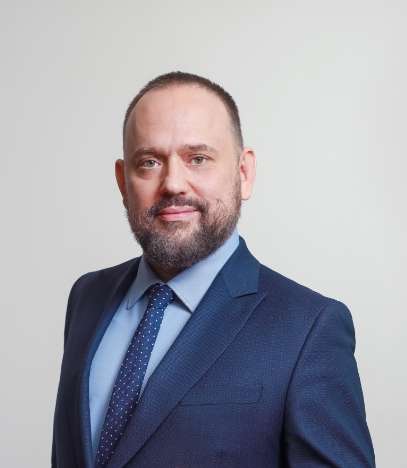
Founder and Managing Partner of Skarbiec Law Firm, recognized by Dziennik Gazeta Prawna as one of the best tax advisory firms in Poland (2023, 2024). Legal advisor with 19 years of experience, serving Forbes-listed entrepreneurs and innovative start-ups. One of the most frequently quoted experts on commercial and tax law in the Polish media, regularly publishing in Rzeczpospolita, Gazeta Wyborcza, and Dziennik Gazeta Prawna. Author of the publication “AI Decoding Satoshi Nakamoto. Artificial Intelligence on the Trail of Bitcoin’s Creator” and co-author of the award-winning book “Bezpieczeństwo współczesnej firmy” (Security of a Modern Company). LinkedIn profile: 18 500 followers, 4 million views per year. Awards: 4-time winner of the European Medal, Golden Statuette of the Polish Business Leader, title of “International Tax Planning Law Firm of the Year in Poland.” He specializes in strategic legal consulting, tax planning, and crisis management for business.